
Beyond the famous red rock parks, a winding mountain road leads through historic Parowan, the alpine beauty of Brian Head, and the spectacular cliffs of Cedar Breaks—revealing a side of Southern Utah many travelers have yet to discover.
The Road Less Traveled: Southern Utah’s High Country Escape
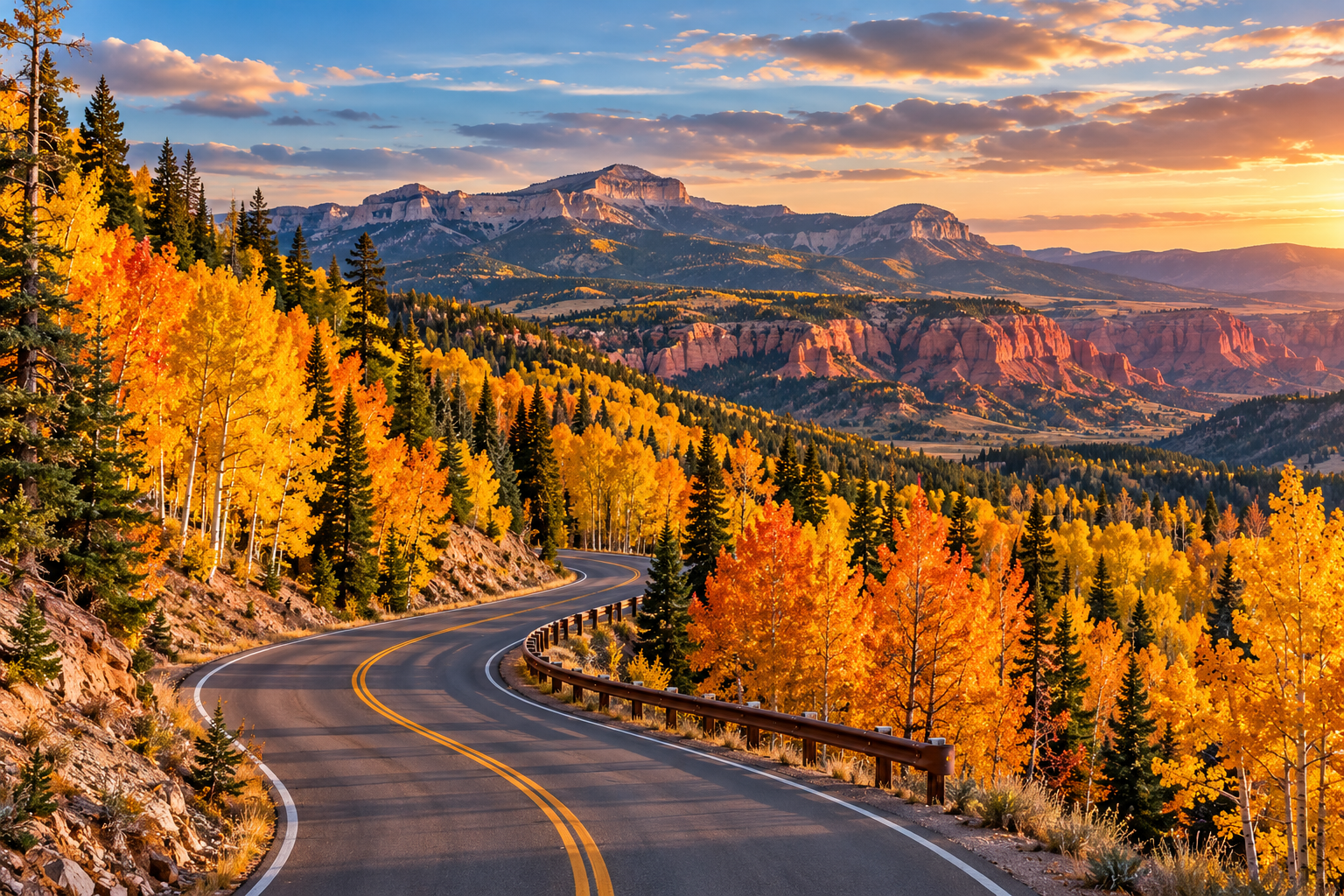
There is another Southern Utah, one that exists beyond the familiar sandstone towers of Zion and the sweeping desert vistas that have made this corner of the American West famous. It is a place of alpine meadows, golden aspen forests, historic towns, and mountain roads that seem to disappear into the clouds. Here, the air grows cooler with every mile, the landscape changes almost without warning, and the journey itself becomes the destination.
From the pioneer streets of Parowan to the mountain resort community of Brian Head and the extraordinary natural amphitheater of Cedar Breaks, Southern Utah’s high country offers a beautiful reminder that sometimes the best discoveries are found along the road less traveled.
There is something wonderfully liberating about leaving the familiar highway behind, rolling down the windows, and following a mountain road simply because you want to see what lies around the next bend.
Utah Homes Journal | Destination Utah
Where History Meets the High Country
Our journey begins in Parowan, a small town nestled at the foot of the mountains in Iron County.
Established in 1851, Parowan is recognized as Southern Utah’s first permanent pioneer settlement. Its historic buildings, tree-lined streets, and quiet neighborhoods preserve much of the character of an earlier Utah. But the history of this region reaches far beyond the arrival of nineteenth-century settlers.
Long before Parowan became a town, Indigenous peoples traveled through this landscape, leaving evidence of their presence in the remarkable rock imagery found at nearby Parowan Gap.
A Journey Through Time and Landscape
1. Parowan: A Town With Stories to Tell
Parowan has the kind of small-town charm that encourages visitors to slow down. Its historic Old Rock Church, now a museum, offers a glimpse into the lives of early settlers, while the surrounding streets reflect generations of community life. Just west of town, Parowan Gap reveals a much older story.
This natural passage through the sandstone hills contains hundreds of petroglyphs associated with Indigenous cultures, including the Fremont tradition and ancestors of Southern Paiute and Hopi peoples. Some researchers have explored possible astronomical relationships between the rock imagery and the movement of the sun, adding another dimension to an already fascinating cultural landscape.
Visitors are encouraged to appreciate the site respectfully, leaving its irreplaceable images undisturbed. Together, Parowan and the Gap offer a reminder that the landscape holds many layers of history, each deserving recognition.
2. Brian Head: A Mountain Town Above the Desert
Leaving Parowan, State Route 143 begins its remarkable climb into the mountains.
Known as the Patchwork Parkway National Scenic Byway, the road winds upward through changing vegetation, dramatic geological formations, and expansive views of the valley below. Eventually, the landscape opens into the mountain community of Brian Head. Best known for its ski resort, Brian Head offers a distinctly different experience from the desert destinations below.
Winter brings snow-covered slopes, cozy mountain accommodations, and the familiar pleasures of ski season. Summer invites hiking, mountain biking, and exploration of the surrounding forests.
Autumn may be the most enchanting season of all, when aspen groves turn brilliant shades of gold and the mountains seem to glow in the afternoon light. It is difficult to believe that the desert floor lies only a short drive away.
Above the Clouds at Cedar Breaks
1. Nature’s Grand Amphitheater
Continuing into the high country, travelers encounter one of Utah’s most spectacular geological treasures. Cedar Breaks National Monument sits at elevations exceeding 10,000 feet, where an immense natural amphitheater opens across the edge of the Markagunt Plateau.
Layers of colorful sedimentary rock display extraordinary shades of orange, crimson, rose, and cream, shaped by erosion into delicate ridges, spires, and intricate formations. The scale is breathtaking.
From overlooks along the rim, visitors can gaze across a landscape that seems almost too elaborate to be entirely natural. During the warmer months, alpine wildflowers brighten the surrounding meadows, while ancient bristlecone pines cling to the exposed terrain. Cedar Breaks may be smaller than Utah’s famous national parks, but its beauty is no less extraordinary.
2. The Magic of the Changing Seasons
Part of what makes this mountain journey so memorable is the dramatic transformation of the landscape throughout the year.
Spring arrives slowly at these elevations, often with lingering snowbanks and the first signs of new growth.
Summer brings cool mountain air, green meadows, wildflowers, and opportunities for hiking and scenic exploration.
In autumn, golden aspens and fiery maples create one of Southern Utah’s most spectacular seasonal displays.
Then winter arrives, covering the plateau in deep snow and transforming the region into an entirely different world.
Road access to Cedar Breaks changes seasonally, and the main scenic road generally closes to vehicles during winter. Travelers should check current conditions before planning a high-elevation drive.
Whatever the season, this is a landscape that rewards curiosity, patience, and a willingness to explore.
Sometimes the Journey Is the Destination
There is a particular kind of freedom found on a quiet mountain road.
Perhaps it is the absence of traffic, the changing colors of the trees, or the realization that there is no particular hurry to arrive anywhere. Southern Utah’s high country offers all of these things.
From the historic streets of Parowan to the alpine slopes of Brian Head and the extraordinary cliffs of Cedar Breaks, the journey reveals a side of Utah that feels both familiar and wonderfully unexpected. It is a place where history, geology, and natural beauty come together without competing for attention.
And perhaps that is the real reward of taking the road less traveled. You begin the day thinking you are simply going somewhere. By the time you return home, you realize the journey has given you something you didn’t know you were looking for.
Utah Homes Journal — Discovering the places, people, and experiences that make Utah extraordinary.

Subscribe to Our Newsletter
Keep in touch with our news & offers






Comments
adamgordon
Thanks for sharing this post, it’s really helpful for me.
annabrown
This is awesome!!
cmsmasters
Glad to be of service.
cmsmasters
Thanks.